

Getting dressed every morning holds more weight than most style guides acknowledge. For young Christians navigating the tension between modern aesthetics and faith-rooted values, choosing the types of god-honoring everyday outfits that feel both genuine and stylish is a real, daily conversation. This is not about covering up or dressing down. It is about building a wardrobe that reflects who you are, whose image you carry, and the quiet conviction that what you wear is worth thinking about.
Table of Contents
- Key takeaways
- 1. The core criteria for god-honoring everyday outfits
- 2. Modest casual wear: the foundational category
- 3. Polished casual: the modest outfit type that does the most
- 4. Layering: the underrated tool for everyday modest outfits
- 5. Faith-expressive pieces: wearing your convictions quietly
- 6. Comparison of god-honoring outfit types by daily context
- 7. Building a minimalist god-honoring wardrobe: the practical approach
- 8. Styling faith into your look without signaling loudly
- My honest take on modesty, style, and what actually matters
- How Human By God fits into your everyday wardrobe
- FAQ
Key takeaways
| Point | Details |
|---|---|
| Modesty is a heart posture | Biblical modesty starts with humility and reverence, not measurements or strict garment rules. |
| Fit matters more than coverage | Well-fitted modest outfits with clean grooming communicate virtue better than shapeless layering. |
| Build a capsule wardrobe | A curated set of 25 to 40 quality pieces gives you more outfit options with less decision fatigue. |
| Neutral palettes create versatility | Investing in neutral, breathable basics makes mixing and matching easier across every daily context. |
| Faith shows without shouting | Subtle details and intentional design communicate your values without requiring overtly religious branding. |
1. The core criteria for god-honoring everyday outfits
Before you build a wardrobe, you need a framework. Not rules. A framework.
Biblical modesty is grounded in a heart attitude of reverence and self-control, not strict garment measurements. First Timothy 2:9-10 connects modest clothing directly to good works, framing attire as an expression of who you are rather than a checklist to follow. That changes everything about how you shop.
Humility is foundational to godly fashion choices and applies across genders. It is not a women’s issue. It is a human one. Clothing that seeks attention, signals status, or fuels pride sits in tension with the person Scripture calls you to be.
The criteria worth applying when you evaluate any outfit:
- Does it reflect self-control? Not just in coverage, but in not being defined by trends or consumption.
- Does it express humility? Would you wear it in front of someone you deeply respect without adjusting it?
- Is it contextually appropriate? Clothing should be missional and relatable, allowing you to connect authentically in whatever room you are in.
- Does it honor the body you carry? Not flaunting it, but not hiding it either. There is dignity in both.
Pro Tip: Before buying a new piece, ask one question: does this serve the people around me, or does it serve my ego? Paul’s instruction to do everything for the glory of God in 1 Corinthians 10:31 includes what you put on your back.
2. Modest casual wear: the foundational category
The most practical of the types of god-honoring everyday outfits you will build is straightforward modest casual wear. These are your high-repetition pieces: the ones that do quiet, consistent work every week.

Modern modest fashion balances coverage with flattering, structured silhouettes rather than shapeless garments. Think looser tops paired with straight-leg pants, or fitted knit tops worn with midi skirts. The goal is proportion, not volume.
Core modest casual wear staples worth owning:
- Midi skirts in neutral solids or minimal prints. They work with sneakers, loafers, or ankle boots.
- Straight-leg or wide-leg trousers in navy, tan, or black. Elevated enough for work, relaxed enough for the weekend.
- Relaxed-fit crewneck tees in quality cotton. Not boxy to the point of carelessness, but not fitted to the point of distraction.
- Lightweight long-sleeve layering tops for year-round coverage and versatility.
The fabric matters more than most people realize. Breathable materials like cotton, linen, and modal drape naturally and wear comfortably. Cheap synthetics pull, cling, and communicate a level of disposability that runs counter to the intentionality modest style is about.
Pro Tip: Build your casual wear foundation around four neutral colors: white, cream, navy, and black. Everything else you buy should work with at least two of them.
3. Polished casual: the modest outfit type that does the most
If modest casual wear is the foundation, polished casual is the category that does the heaviest daily lifting. It covers more contexts: a coffee meeting, a Sunday service, a study session, a work presentation.
The formula is simple. A structured piece paired with something relaxed. A blazer over a knit top. A tailored trousers silhouette with a tucked shirt. A well-proportioned midi dress in a solid color. The key principle is that modest fashion uses intentional design, not just loose cuts. Strategic seam placement and proportioned hems create flattering silhouettes without compromising what you are communicating.
This is where Christian outfit ideas start to feel genuinely contemporary. You are not dressing down to be modest. You are dressing with thought, which reads as confidence.
4. Layering: the underrated tool for everyday modest outfits
Layering is not just a cold-weather strategy. It is one of the most practical everyday modest outfit techniques available, and most people underuse it.
A base layer, a mid layer, and an outer layer give you full coverage and full flexibility. A fitted long-sleeve worn under a sleeveless linen dress. An open button-down shirt over a basic tee and straight-leg pants. A relaxed cardigan over a midi skirt and knit top. Each combination gives you a different visual weight and formality level without requiring a new outfit from scratch.
Layering also solves the context problem. You can move from a gym session to a coffee run to a church gathering without changing your entire look. You just adjust what you add or remove.
5. Faith-expressive pieces: wearing your convictions quietly
One of the most nuanced types of god-honoring everyday outfits involves faith-expressive clothing: pieces that communicate belief without announcing it. This is where brands like Human By God operate. The design approach is quiet, color-coordinated typography rooted in Scripture. No slogans. No clichés. Just identity, worn with restraint.
The difference between a piece that communicates faith and one that performs it is subtlety. A hoodie with understated embroidery rooted in Genesis 1:26 says something real without requiring the wearer to explain themselves. It invites conversation rather than starting an argument.
This category works best when it functions as an anchor piece in an otherwise simple outfit. Neutral bottoms, clean shoes, and a faith-expressive top or outer layer. The message carries precisely because everything around it is quiet.
6. Comparison of god-honoring outfit types by daily context
Not every outfit type works for every setting. Here is a direct look at how the main categories compare:
| Outfit type | Best context | Modesty level | Ease of wear | Style impact |
|---|---|---|---|---|
| Modest casual wear | Everyday, gym, errands | High | Very easy | Understated |
| Polished casual | Work, church, social | High | Moderate | Refined |
| Layered looks | Transitions, cooler weather | Very high | Moderate | Textured, intentional |
| Faith-expressive pieces | Daily wear, casual outings | High | Easy | Quietly distinctive |
| Structured midi dresses | Church, events, meetings | Very high | Easy | Elegant |
The most versatile single category is polished casual. It reads well in almost any room, requires minimal accessorizing, and communicates intentionality without effort. Layered looks take more thought but reward you with the most contextual flexibility.
Pro Tip: When you are unsure whether an outfit works for a given setting, think about whether it would cause someone to focus on you rather than the conversation or the service. If the answer is yes, simplify it.
7. Building a minimalist god-honoring wardrobe: the practical approach
The practical side of easy godly style is about curation, not accumulation. A functional modest capsule wardrobe typically consists of 25 to 40 items: 8 to 12 tops, 6 to 10 bottoms, 3 to 5 dresses, and 3 to 5 outerwear pieces made from breathable fabrics. That range sounds modest, and it is by design.
Here is a numbered approach to building it:
- Audit what you already own. Pull out what fits well, what you actually wear, and what reflects your values. Donate the rest without guilt.
- Identify your core contexts. What are the five settings you dress for most often? Build toward those, not aspirationally.
- Invest in three anchor pieces first. A well-fitted blazer, a quality midi skirt, and a versatile outermost layer will do more work than ten fast-fashion items.
- Apply the French tuck. Tucking the front of a top into your waistband adds shape and prevents a shapeless silhouette without compromising coverage. It is one small technique that changes how every outfit reads.
- Attend to grooming and posture. Fit, grooming, and posture communicate virtue and intention more powerfully than fabric coverage alone. A well-groomed person in simple clothes reads as polished and grounded.
- Use budget wisely. Thrift stores, secondhand apps, and small ethical brands carry quality modest pieces at accessible prices. You do not need to spend premium to dress with intention, though quality fabrics will always reward you over time.
- Treat your wardrobe as a practice. Like any discipline, it gets clearer and more natural with repetition. Each season, review what worked and what did not.
8. Styling faith into your look without signaling loudly
There is a version of Christian outfit ideas that performs faith for an audience. Then there is a version that simply lives it. The second one is harder to achieve and more worth pursuing.
Quality modest clothing brands prioritize fabric, fit, and construction for pieces that allow movement and confidence. The best modest pieces are not recognizable as modest pieces. They are just good clothes, worn with purpose.
A few principles that hold up:
- Choose texture over decoration. A nubby linen top or a structured waffle knit reads as considered. Heavy graphic branding reads as noise.
- Let your authentic discipleship inform how you present yourself. If you are pursuing genuine humility in how you live, it will come through in how you dress without you having to engineer it.
- Invest in one or two faith-expressive anchor pieces that carry meaning for you. Wear them with clothes that do not compete.
- Keep accessories quiet. A simple watch, a clean bag, and uncluttered shoes reinforce the rest of the outfit rather than diluting it.
The goal is a wardrobe where your identity in Christ shows up without shouting. That is a harder brief than it sounds, and it is also more interesting to solve.
My honest take on modesty, style, and what actually matters
I have been thinking about modesty and style long enough to know that the conversation usually gets stuck in the wrong place. People debate hemlines and necklines when the real question is motivation.
The primary motive for modest dressing should be love for God’s glory, not legalism or fear of what others think. That distinction changes everything. When modesty comes from love, it is freeing. When it comes from rules, it is exhausting and often counterproductive.
What I have learned is that the most well-dressed people I know are not the ones with the most pieces or the most expensive brands. They are the people who know who they are and dress accordingly. There is a stillness to that kind of style. It does not demand attention. It earns it.
Modesty is a heart posture before it is a dress code. The clothes follow from that. If you are genuinely cultivating humility, self-control, and reverence in your daily life, your wardrobe will start to reflect that over time, with or without a strict set of rules guiding every purchase.
Build the inner life. The style will come.
— H
How Human By God fits into your everyday wardrobe
If you are assembling the kind of faith-rooted, minimalist wardrobe this article describes, you need anchor pieces that carry meaning without overexplaining themselves. Human By God designs exactly that.
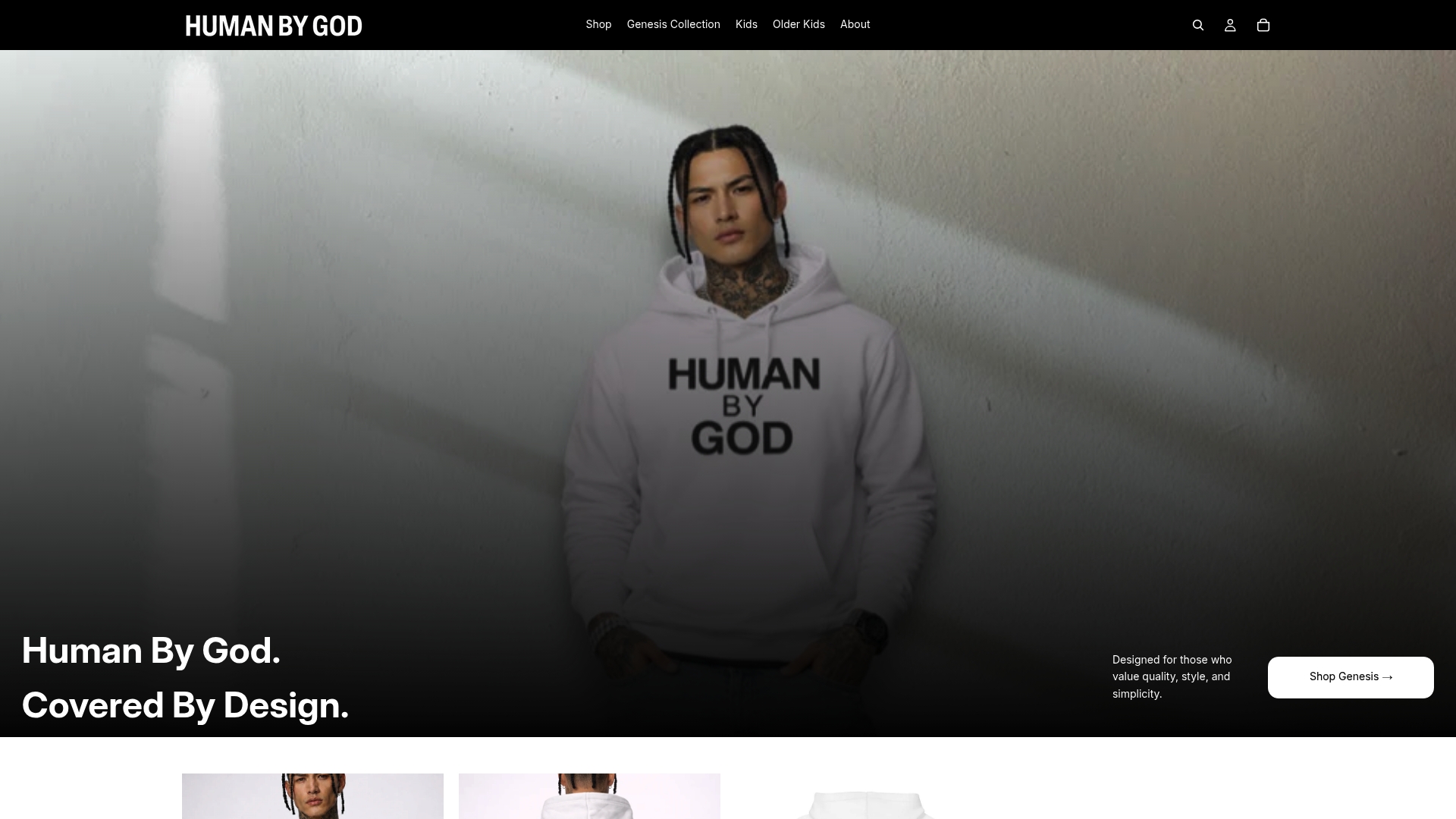
The brand’s embroidered hoodies are built for everyday wear. To the gym, on a walk, to a study session. The typography is restrained, the construction is premium, and the message is rooted in Scripture without performing it. The Protected in Plain Sight hoodie and the Genesis Cap both work as quiet anchors in a simple outfit. No clichés. No noise. Just identity, worn with intention.
If you want pieces that sit comfortably alongside anything in your wardrobe while saying something real, Human By God is worth starting with.
FAQ
What makes an outfit god-honoring?
A god-honoring outfit reflects humility, self-control, and contextual awareness. It is grounded in the biblical principle that clothing should express good works and reverence, not draw attention to the wearer.
How do I build a modest wardrobe without looking outdated?
Focus on neutral palettes, quality fabrics, and well-fitted silhouettes. Modern modest fashion pairs structured pieces with relaxed ones, creating looks that are current and covered without being shapeless.
Can I wear streetwear and still dress modestly?
Yes. Brands like Human By God design streetwear specifically for faith-rooted wearers, using restrained typography and quality construction. The key is choosing pieces where the design reflects intentionality rather than status or attention-seeking.
How many pieces do I need for a modest capsule wardrobe?
A functional modest capsule wardrobe typically holds 25 to 40 pieces, including tops, bottoms, dresses, and outerwear in breathable, mix-and-match fabrics.
Does modest dressing apply to men too?
Yes. Biblical modesty is rooted in humility, which Scripture commands for everyone. For men, it means avoiding clothing that signals pride, status, or distraction, and dressing with the same intentionality that benefits any believer.