

Most hoodies claiming a cause stop there. They put a slogan on the chest, mention a charity in the footer, and call it purpose. For anyone searching for premium hoodie brands with purpose, that gap between marketing and meaning is the actual problem. The brands worth your money are the ones that show you exactly where your dollar goes, what the fabric weighs, who made it, and why any of that matters to them beyond the sales cycle. This article breaks down how to spot the real ones, which brands currently earn that designation, and how to choose based on what you actually value.
Table of Contents
- Key takeaways
- 1. What makes premium hoodie brands with purpose worth the price
- 2. Wear The Peace
- 3. Kind Cotton
- 4. 300 Letters
- 5. Fair Indigo
- 6. For Everyone Collective
- 7. Earthletica
- 8. Fervor & Zeal
- 9. SOSA Conservation Apparel
- 10. Comparing impact, quality, and price across brands
- 11. How to choose the right brand for your values and style
- My take on what purpose-driven fashion actually requires
- Purpose-rooted hoodies from Human By God
- FAQ
Key takeaways
| Point | Details |
|---|---|
| Transparency is non-negotiable | The best brands show donation amounts, beneficiaries, and impact timelines — not just percentages. |
| Fabric weight signals quality | Premium purpose hoodies typically use 6.5oz to 9oz fleece, which reflects both construction care and durability. |
| Certifications matter more than claims | Third-party marks like B Corp, GOTS, and Oeko-Tex carry actual auditing behind them. |
| Production ethics shape real impact | Made-to-order and fair-wage production reduce waste and extend the impact beyond the donation line. |
| Your values should drive the choice | Whether environmental, social, or faith-rooted, the right brand is the one whose mission you’d stand behind publicly. |
1. What makes premium hoodie brands with purpose worth the price
The phrase “purpose-driven brand” has been used so often it has nearly lost its meaning. So the first skill is learning how to read through it. There are five specific things worth examining before any purchase.
Donation transparency. A brand should tell you the exact dollar amount donated per unit, who receives it, and when. Not “a portion of profits.” Not “we give back.” Wear The Peace, for example, specifies that $9 per hoodie is split evenly across aid in Gaza, Congo, and Sudan after costs are deducted. That level of specificity is the baseline.
Fabric composition and weight. Premium purpose hoodies typically use heavyweight fleece between 6.5oz and 9oz, which affects both durability and how the garment sits on the body. Cotton-polyester blends, organic cotton, and recycled polyester each carry different environmental profiles. Know what you are wearing.
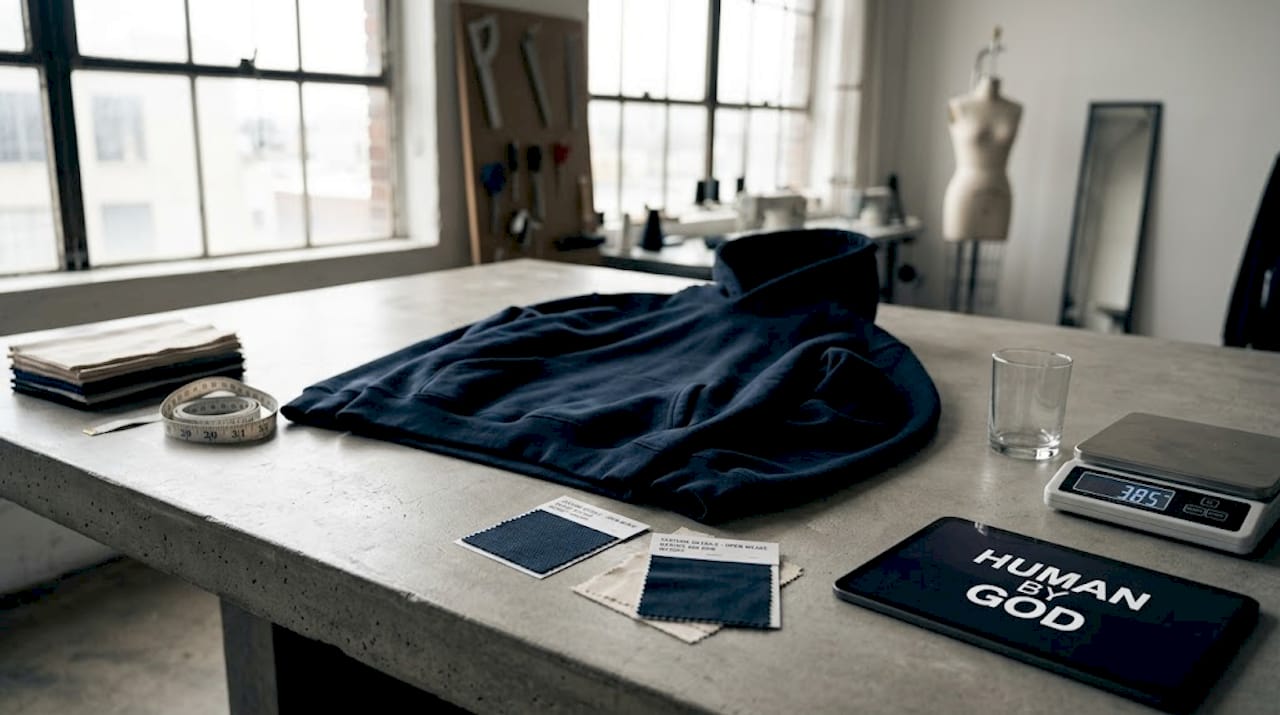
Third-party certifications. Certifications like GOTS (Global Organic Textile Standard), Oeko-Tex, and B Corp are not marketing copy. They require audits. Stacking multiple certifications signals deeper supply chain traceability than any single badge alone.
Production ethics. How a garment is made matters as much as what it is made from. Made-to-order production eliminates overstock. Fair wages in the supply chain means the cost of purpose does not fall on the workers.
Social impact model. There is a meaningful difference between percentage-of-profits giving, fixed-unit giving, and community-employment models. Each creates different kinds of accountability. Know which one a brand uses before deciding whether it aligns with how you think about impact.
Pro Tip: Look beyond donation percentages to examine the donation base. Profits after costs, gross revenue, and fixed amounts per unit produce very different real dollar outcomes for the same claimed percentage.
2. Wear The Peace
Wear The Peace centers on direct humanitarian relief. Their donation model is unusually transparent. Every hoodie purchase routes $9 split equally to three active conflict regions, with the cost breakdown visible on the product page. The garments are made in the USA using a 60/40 cotton-polyester blend. The aesthetic is restrained. The focus is squarely on accountability.
What sets them apart is the refusal to obscure what “donating profits” actually means in dollar terms. They show the math. That practice should be standard. It rarely is.
3. Kind Cotton
Kind Cotton operates on a unit-donation model. Each hoodie purchase results in one inclusive children’s book donated to young readers in Minnesota. The fabrics are GOTS-certified organic cotton and recycled polyester, which means the environmental credibility is independently verified. Their focus on early childhood education through the donation model gives the impact a defined, trackable beneficiary group.
The clarity of “one purchase, one book” removes ambiguity. Buyers know exactly what happens. That simplicity, combined with certified materials, makes Kind Cotton a strong option for shoppers who prioritize both environmental and social accountability.
4. 300 Letters
300 Letters is built around criminal justice reform. Every hoodie is made to order, which directly addresses the overproduction problem that makes most fashion environmentally costly. The 6.5oz midweight fleece construction sits at the lighter end of premium weight while still delivering structure and warmth. One hundred percent of proceeds go toward supporting families affected by incarceration.
The made-to-order model deserves particular attention. It means no dead inventory. No surplus sitting in a warehouse. The production exists because a specific person bought it. That is a more honest relationship with waste than most brands are willing to commit to.
5. Fair Indigo
Fair Indigo uses 100% organic Peruvian pima cotton with earth-friendly certified dyes that comply with both Oeko-Tex 100 and CPSIA standards. Pima cotton is a premium fiber with a longer staple length than standard cotton, which translates to a softer hand feel and better durability over time. The brand’s commitment to chemical safety frameworks tied to actual garment inputs, rather than vague sustainability language, makes their environmental claims verifiable.
For shoppers who prioritize health-conscious textiles alongside ethical production, Fair Indigo’s certification stack is one of the more thorough in the market.
Pro Tip: When evaluating eco-friendly hoodie options, ask whether the brand names the specific certification standard and the certifying body. Generic claims like “sustainable dyes” without a named standard are marketing, not accountability.
6. For Everyone Collective
For Everyone Collective employs formerly incarcerated individuals to print their garments. The social impact here is structural, not just monetary. It is built into the production model itself. The 9oz midweight fleece blend is substantial. It wears like an investment piece rather than a seasonal item.
The brand operates across multiple impact pillars: community employment, economic reintegration, and premium craft. That layering is what distinguishes a genuinely purposeful model from a brand that donates to a cause at arm’s length.
7. Earthletica
Earthletica holds B Corp certification, which means their social and environmental performance has been audited by an independent third party. B Corp status is not a one-time achievement. It requires recertification and ongoing accountability. For shoppers who want an external trust signal beyond what a brand says about itself, B Corp is currently the most credible available.
Earthletica’s transparency in reporting and commitment to verified standards places them in a category of conscious fashion brands that take accountability seriously as an operational practice rather than a brand narrative.
8. Fervor & Zeal
Fervor & Zeal donates 50% of profits and reported $8,525.92 donated in their first year of operation. That figure matters because it provides temporal and proportional benchmarks. You can evaluate the scale of impact relative to what they claim. Their B Corp approach integrates impact reporting as a core operational function, not an afterthought.
The published dollar amount in year one reflects a brand willing to be held to its own numbers. That kind of openness signals something about how a company is run internally.
9. SOSA Conservation Apparel
SOSA uses a threshold-based donation model. Purchases over $100 contribute to a pooled fund directed toward international wildlife NGOs. This differs structurally from per-unit or profit-percentage models. It creates a collective giving mechanism rather than a direct per-purchase impact. Whether that model resonates depends on how you think about your individual contribution versus collective impact.
Their minimalist aesthetic is clean. For shoppers whose primary cause is wildlife and conservation rather than humanitarian relief or social justice, SOSA represents a considered option in the eco-friendly hoodie category.
10. Comparing impact, quality, and price across brands
| Brand | Donation model | Fabric | Certification | Price range |
|---|---|---|---|---|
| Wear The Peace | $9 fixed per unit (profit-based) | 60/40 cotton-poly | Made in USA | $50–$75 |
| Kind Cotton | 1 book per unit | GOTS organic cotton, recycled poly | GOTS | $65–$85 |
| 300 Letters | 100% proceeds | 6.5oz midweight fleece | Made to order | $55–$80 |
| Fair Indigo | Fair trade profit share | 100% organic pima cotton | Oeko-Tex 100, CPSIA | $60–$90 |
| For Everyone Collective | Employment model | 9oz midweight fleece | Community impact | $70–$95 |
| Earthletica | Audited social/env. standards | Varies | B Corp | $65–$100 |
| Fervor & Zeal | 50% of profits | Premium blends | B Corp approach | $60–$85 |
| SOSA | Pooled fund (orders over $100) | Midweight fleece | Brand self-reported | $80–$110 |
11. How to choose the right brand for your values and style
Narrowing it down is a personal process. But there are a few honest questions that help.
Start with your cause priority. Are you drawn to humanitarian relief, environmental accountability, social justice, or faith-rooted identity? The brands above each anchor to a different center of gravity. Matching your own to theirs makes the purchase feel less like consumption and more like alignment.
Then consider how you define quality. Fabric weight is a reliable proxy. If you want a hoodie that holds its shape after two years of wear, look for garments in the 8oz to 9oz range. If you prefer something lighter for year-round use, 6.5oz is still premium when the fiber quality is right.
Budget is real. But the investment mindset tends to serve better here. A $90 hoodie worn 200 times costs less per wear than a $30 hoodie that pills after 15 washes. Purpose-driven brands that use premium materials are often asking you to buy less and wear more. That itself is a form of sustainability.
Pro Tip: Shop for longevity over newness. One hoodie from a brand with certified organic cotton and a transparent donation model will carry more actual impact than three cheaper alternatives over the same period.
Finally, look for ongoing accountability. A brand that published its impact numbers last year should be publishing them again this year. Purpose is not a launch campaign. It is a practice.
My take on what purpose-driven fashion actually requires
I’ve spent enough time around this category to know that donation percentages are among the most misleading numbers in fashion marketing. A brand can say “we donate 20% of profits” and deliver $0.80 per garment if the margins are thin enough. The donation base definition is where the real story lives. Profits after costs vs. gross revenue vs. a fixed unit amount produce radically different outcomes. That detail is almost never surfaced in the headline.
What I find more telling than any donation number is how a brand talks about its fabric. Companies that care about what they make tend to be specific about it. They tell you the weight, the fiber source, the certifying body. The ones that do not usually have something to hide in the supply chain.
Third-party certifications are the closest thing to a shortcut. Not because they replace your own judgment, but because they represent someone else’s rigorous judgment already applied. B Corp certification in particular requires ongoing re-evaluation. A brand can lose it. That possibility creates a different kind of incentive than a static “certified sustainable” label that never expires.
The most honest signal of all is production volume control. A brand willing to operate made-to-order, accepting smaller margins and slower fulfillment, is telling you something real about its relationship to waste. Most brands are not willing to do that. The ones that are have usually thought harder about what purpose actually costs.
— H
Purpose-rooted hoodies from Human By God
Human By God was built on a single conviction: humans are made in the image of God. That idea, drawn from Genesis 1:26, shapes every design decision the brand makes. No clichés. No decorative scripture. Just quiet, color-coordinated typography that carries weight without announcing itself.
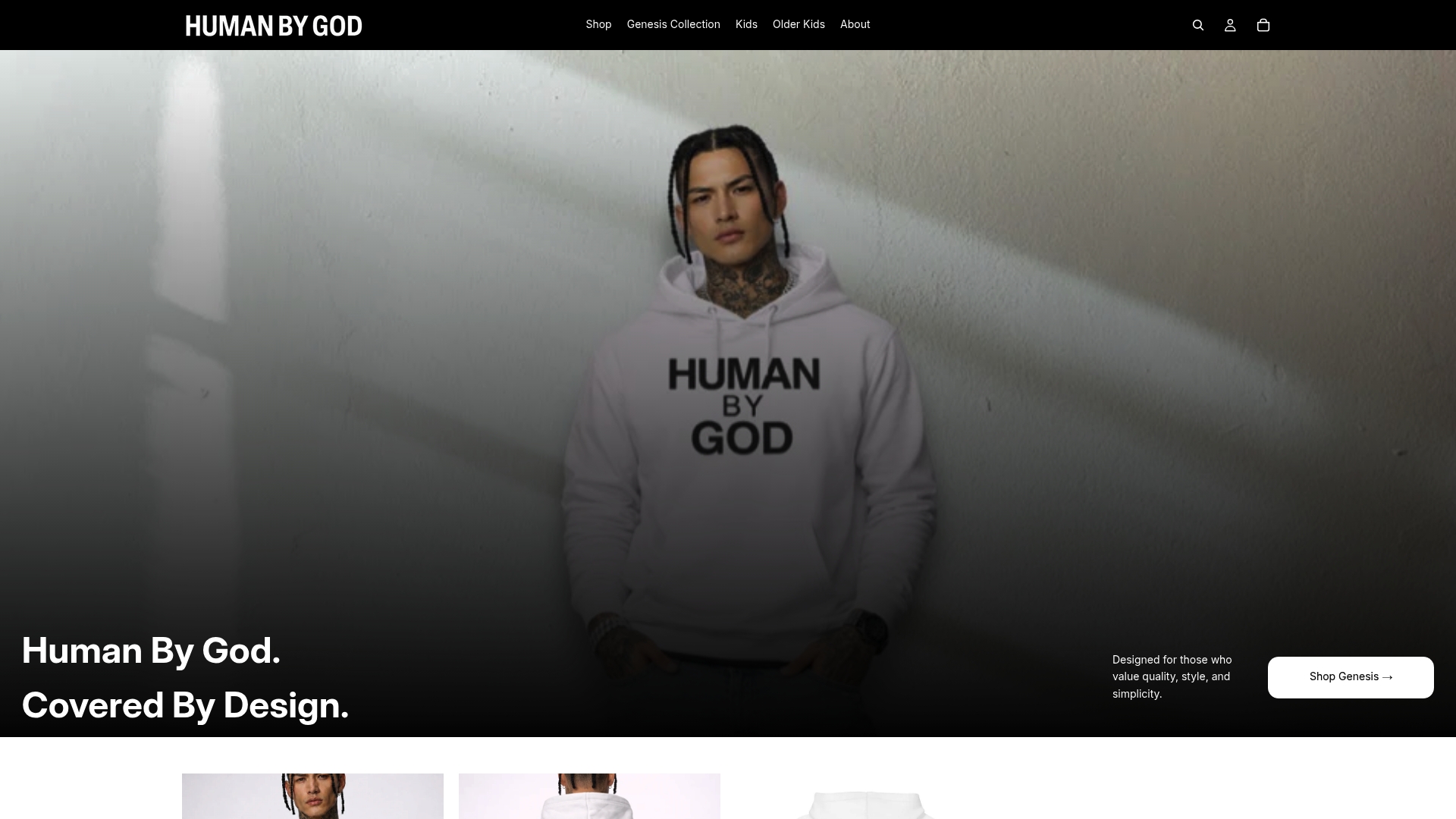
The brand’s made-to-order model means nothing is produced speculatively. Each piece exists because someone chose it. That approach to production aligns with everything this article has argued for: less overstock, more intention, and a garment you actually want to wear for years. The Watched Over. Built Different. hoodie is a precise example of that. Embroidered, minimal, and built to last.
For those drawn to printed work, the printed hoodies collection offers the same restrained aesthetic in a different execution. And the Every Move Seen embroidered hoodie carries a phrase rooted in the same accountability theology that runs through Human By God’s entire catalog. Worth exploring alongside the Genesis Cap if you want the full picture.
FAQ
What makes a hoodie brand truly “purpose-driven”?
A genuinely purpose-driven brand shows specific dollar amounts donated, names the beneficiaries, uses verified materials, and maintains transparency over time. Marketing language without those specifics is not purpose. It is positioning.
Which certifications should I look for in ethical hoodie brands?
B Corp, GOTS, and Oeko-Tex are the most credible because each requires independent auditing. Brands that stack multiple certifications demonstrate higher supply chain traceability than those with a single self-reported sustainability claim.
Are premium purpose hoodies worth the higher price?
Yes, when the quality matches the cost. Look for fabric weights between 6.5oz and 9oz and fiber specifications like organic pima cotton or GOTS-certified blends. A well-made hoodie worn consistently over years costs less per wear and creates less waste than repeated cheap replacements.
What is B Corp certification and why does it matter for fashion?
B Corp certification is an independently audited standard that measures a company’s social and environmental performance. For fashion shoppers, it functions as an external accountability signal that goes beyond what a brand claims about itself.
How do I know if a brand’s donation model is genuinely impactful?
Ask what the donation is calculated against. Fixed per-unit donations offer the clearest math. Percentage-of-profits models require you to know the margin. Brands that publish the actual dollar amounts donated, as Fervor & Zeal did in their first-year report, give you something concrete to evaluate.