

The role of quality in children’s faith apparel is to preserve both the garment’s physical integrity and the legibility of its faith message across months of real wear, not just the first wash. In the broader category of faith-based children’s clothing, quality is the standard term manufacturers and retailers use to describe the intersection of fabric safety, construction durability, and print longevity. Parents who want their child’s clothing to carry meaning without shouting it need garments that hold their shape, protect sensitive skin, and keep typography readable after the twentieth wash. Brands like Human By God are built on exactly this premise: that a well-made piece of faith apparel speaks more quietly and more lastingly than a cheap one ever could.
What materials define quality children’s faith apparel?
Premium children’s faith apparel starts with fabric selection, and the difference between a garment that lasts one season and one that lasts three is almost always in the fiber. Natural fibers like certified organic cotton, bamboo, and merino wool are the standard for softness and skin safety in quality children’s clothing. They breathe, they wash well, and they do not irritate the sensitive skin that infants and toddlers have.
Certifications matter here more than marketing language. GOTS certification limits pH levels and restricts harmful chemicals in textiles, which is especially significant for infant sleepwear that contacts skin for 16 to 20 hours daily. OEKO-TEX Standard 100 provides a similar chemical safety guarantee at the finished garment level. A brand that displays neither certification is asking you to take its word on safety.
Fabric weight is the other variable most parents overlook. Heavier cotton blanks, like the Comfort Colors 1717 at 6.1 oz, give faith apparel a substantial feel that aligns with authentic, understated Christian identity. Lightweight tees feel thin after a few washes and lose their shape faster. For faith apparel specifically, fabric weight also affects how well a print holds its edges over time.
- Certified organic cotton: soft, breathable, and free from synthetic pesticide residue
- Bamboo blends: naturally antimicrobial and exceptionally soft for newborn and toddler skin
- Merino wool: temperature-regulating and odor-resistant, suited for layering in cooler months
- Heavyweight cotton (6 oz and above): holds print integrity and resists thinning after repeated washing
Pro Tip: When evaluating a brand’s fabric claims, look for the actual certification number on the product page, not just the logo. Legitimate GOTS and OEKO-TEX certifications are traceable and publicly verifiable.
How does garment construction affect longevity?
Fabric is only half the equation. A garment made from premium cotton but assembled with weak seams will fail within a season of active wear. Garment construction failures like seam slippage and stretched neckbands become apparent only after multiple washes, not on first inspection. This is why Pi Baby Boutique recommends hand-inspecting seam reinforcement before purchase, because price and appearance alone do not reveal construction quality.
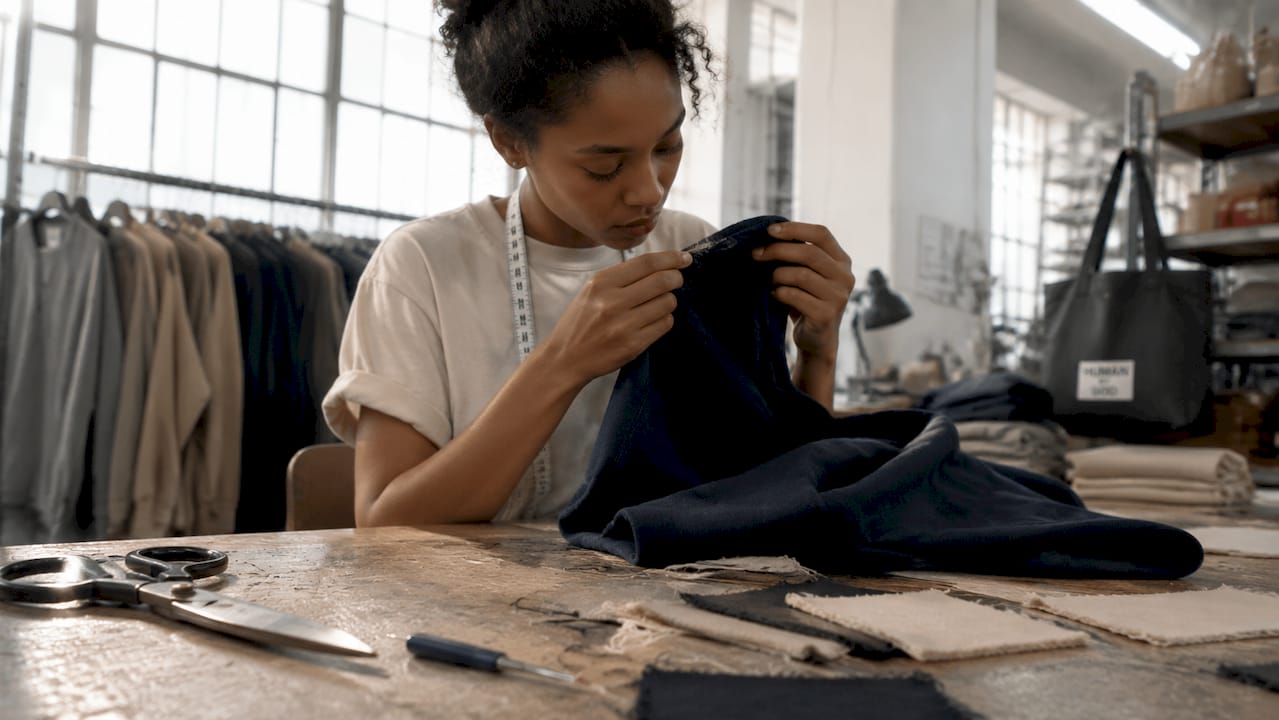
Double-stitched and reinforced seams are the clearest indicator of a garment built to last. They resist the mechanical stress of children pulling, stretching, and tumbling in ways that single-stitch construction simply cannot. Hardware like snaps and drawstring tips should be tested for resistance to repeated use, since these are the first points of failure on children’s outerwear.
Dimensional stability after washing is a specific technical standard that retail buyers use to evaluate children’s apparel. Shrinkage tolerance and post-wash recovery are tested against AATCC and ISO standards to verify that a garment retains its fit after laundering. For faith apparel designed to be passed down between siblings or worn across multiple growth stages, this stability is not optional. It is the difference between a garment that becomes a family artifact and one that gets discarded after a single season.
Pro Tip: Turn a new garment inside out and examine the seam allowances before the first wash. Wide, even seam allowances with reinforced stitching at stress points indicate a manufacturer who builds for longevity, not just appearance.
Which printing techniques best preserve faith messages on kids’ clothing?
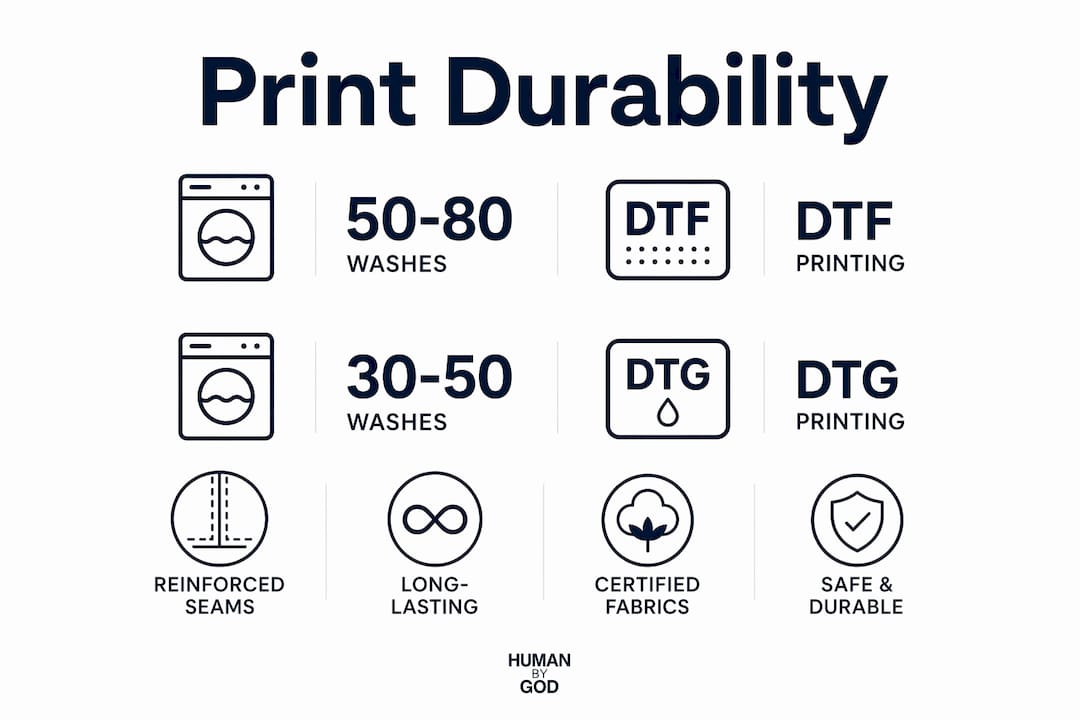
The typography on a faith garment is its most meaningful element. A print that fades or cracks after ten washes does not just look worn. It erases the message. Two digital printing methods dominate quality faith apparel production: direct-to-garment (DTG) and direct-to-film (DTF).
| Method | Wash Durability | Feel on Fabric | Best Use Case |
|---|---|---|---|
| DTG (Direct-to-Garment) | 30 to 50 washes | Soft, fabric-integrated | Detailed artwork, photographic prints |
| DTF (Direct-to-Film) | 50 to 80 washes | Slight surface texture | Bold typography, high-wear garments |
DTF printing lasts 50 to 80 washes, outperforming DTG’s 30 to 50 wash lifespan. That gap is significant for children’s clothing, which gets laundered far more frequently than adult apparel. DTF uses an adhesive layer that bonds the design to the fabric surface, giving it stronger abrasion resistance at the print edges. DTG, by contrast, deposits ink directly into the fabric fibers, producing a softer hand feel that many parents prefer for items worn against a child’s skin.
The practical implication is straightforward: for bold, scripture-based typography on hoodies and tees designed for daily wear, DTF is the more durable choice. For softer, more detailed artwork on items worn close to the skin, DTG offers a better tactile experience. Both methods benefit significantly from proper laundering, which is covered in the next section.
What care practices extend the life of faith apparel for kids?
Proper laundering is the single most controllable factor in how long a child’s faith garment stays functional and legible. Cold water washing and avoiding high-heat dryers preserve fabric integrity and extend garment life significantly. Heat is the primary cause of shrinkage, color fading, and print degradation in children’s clothing.
Follow these four steps to maximize the lifespan of any quality faith garment:
- Wash inside out in cold water. This reduces abrasion on the print surface and protects color saturation. Washing inside out is the single most effective habit for preventing print peeling, particularly at the edges of DTF transfers.
- Use a gentle, fragrance-free detergent. Harsh detergents break down fabric fibers and degrade colorfast inks faster than normal wear. Natural detergents like those from brands such as Seventh Generation or Molly’s Suds are formulated to be gentler on both fabric and skin.
- Air dry or use low heat. High dryer heat causes cotton to shrink and lose dimensional stability. Air drying on a flat surface preserves both the garment’s shape and the print’s adhesion.
- Follow brand-specific care instructions exactly. Premium faith apparel brands include care labels calibrated to their specific fabric blends and printing methods. Ignoring them is the fastest way to void the quality you paid for.
Better fabric quality combined with proper laundering produces clothing that remains soft and message-true for many more wears than the average parent expects. The care routine is not an afterthought. It is part of the garment’s total value.
Why quality supports subtle faith identity without clichés
The most durable faith apparel for children is also, almost always, the most understated. This is not a coincidence. Brands that invest in premium materials and construction tend to invest equally in restrained, thoughtful design. The two commitments come from the same place: a belief that the message matters more than the noise around it.
Quality faith apparel brands communicate their values through transparency in materials sourcing and garment construction. A brand willing to publish its fabric certifications and manufacturing standards is a brand confident in what it has built. That confidence shows in the design choices too.
For parents who want their child’s clothing to reflect Christian identity without relying on slogans or graphic crosses, the benefits of quality materials in kids’ clothing extend beyond the physical:
- Durability means the garment becomes part of a child’s regular rotation, not a special occasion piece
- Minimalist typography rooted in Scripture, like references to Genesis 1:26, carries meaning without requiring explanation
- Timeless design supports pass-down potential, which is both economically and spiritually significant
- Transparency in sourcing signals that a brand’s values align with the family’s own
The role of apparel in raising faith identity is quiet and cumulative. A well-made garment worn daily does more work than a statement piece worn once. Quality is what makes daily wear possible.
Key takeaways
Quality in children’s faith apparel requires certified fabrics, reinforced construction, durable printing, and consistent care to preserve both the garment and its message across real-world use.
| Point | Details |
|---|---|
| Fabric certification matters | GOTS and OEKO-TEX certifications verify chemical safety, especially critical for infants and toddlers. |
| Construction reveals true quality | Double-stitched seams and dimensional stability post-wash are the real indicators of a garment built to last. |
| Print method affects message longevity | DTF printing lasts 50 to 80 washes; DTG lasts 30 to 50. Match the method to the garment’s use case. |
| Care habits extend lifespan | Washing inside out in cold water and air drying are the two highest-impact care practices for faith apparel. |
| Minimalist design and quality align | Brands that invest in materials tend to invest in restraint, producing apparel that carries faith identity without clichés. |
What I’ve learned about quality and faith apparel for children
Most parents I talk to conflate price with quality, and most brands let them. A higher price tag on a children’s faith garment does not automatically mean better seams, safer fabric, or a print that will survive a school year. What it often means is a better marketing budget.
The brands worth trusting are the ones that publish their certifications, name their fabric suppliers, and design with enough restraint that the garment can be worn to the park, the classroom, and Sunday morning without looking out of place in any of them. That restraint is harder to achieve than it looks. It requires confidence in the message itself, not in how loudly it is displayed.
I have also noticed that children wear what feels good. A scratchy, stiff garment with a faith message on it gets left in the drawer. A soft, well-fitted hoodie gets worn until it falls apart. The spiritual dimension of children’s faith apparel is inseparable from its physical comfort. You cannot separate the two. A garment that a child reaches for every morning because it feels right is doing more work than any billboard-style graphic tee ever could.
When I look at what Human By God is building with pieces like the Genesis 1:26 kids hoodie, I see a brand that understands this. The typography is quiet. The construction is built for daily wear. The message is rooted in Scripture without performing it. That combination is rarer than it should be.
— H
Faith apparel your child will actually wear
Human By God designs children’s faith apparel for the everyday, not the occasion. The Genesis Collection brings together hoodies, tees, and caps built from quality materials with color-coordinated typography rooted in Genesis 1:26. Every piece is designed to be worn to school, to the gym, on a walk, without explanation required. The prints are durable, the fabrics are chosen for comfort and longevity, and the designs carry faith identity without a single cliché. If you are building a wardrobe that reflects what your family believes, this is where to start.
FAQ
What makes children’s faith apparel high quality?
High-quality children’s faith apparel combines certified fabrics (GOTS or OEKO-TEX), reinforced double-stitched seams, and durable printing methods that preserve message legibility across repeated washing. Construction details like dimensional stability post-wash and hardware durability are equally important indicators.
How long should a quality faith garment last a child?
With proper care, including cold water washing and air drying, a well-constructed children’s faith garment should last through multiple growth stages or at least one to two full years of regular wear. Fabric weight and seam construction are the primary factors that determine lifespan.
Does print type affect how long a faith message stays readable?
DTF printing lasts 50 to 80 washes while DTG lasts 30 to 50, making print method a direct factor in message longevity. Washing garments inside out in cold water extends the lifespan of both methods significantly.
How do I know if a faith apparel brand uses safe fabrics for my child?
Look for published GOTS or OEKO-TEX certification numbers on the product page, not just logos. Legitimate certifications are traceable through the certifying body’s public database, and brands with nothing to hide make this information easy to find.
Is quality faith apparel worth the higher price for kids who outgrow clothes quickly?
Quality faith apparel holds its shape, color, and print integrity long enough to be passed down to younger siblings, which changes the cost-per-wear calculation significantly. Timeless design and durable construction also mean the garment remains wearable across multiple seasons rather than looking worn after one.