

Scripture-inspired streetwear is defined as apparel that embeds biblical language, imagery, or theology into contemporary street-style silhouettes with the intention of expressing faith as identity rather than performance. The industry term for this broader category is faith-based fashion, and it has moved well past Sunday-morning aesthetics into a daily wardrobe discipline practiced by Gen Z and millennial believers worldwide. Brands like Human By God and Avodah Dynamics represent the premium end of this movement, designing pieces that carry scriptural weight without resorting to loud graphics or tired slogans. Scripture quotes apparel, once synonymous with cheap screen-printed tees sold at church conferences, now competes directly with Fear of God Essentials and Honor The Gift on quality, restraint, and cultural credibility.
What characterizes scripture-inspired streetwear in design and materials?
The defining feature of premium scripture-inspired streetwear is construction quality treated as a theological statement. Heavyweight cotton at 300+ GSM and durable embroidery are the preferred materials, chosen because physical excellence reflects the discipline that faith demands. Cheap screen-printed slogans communicate the opposite: that the message is disposable. The fabric choice is the first signal of whether a brand takes its mission seriously.
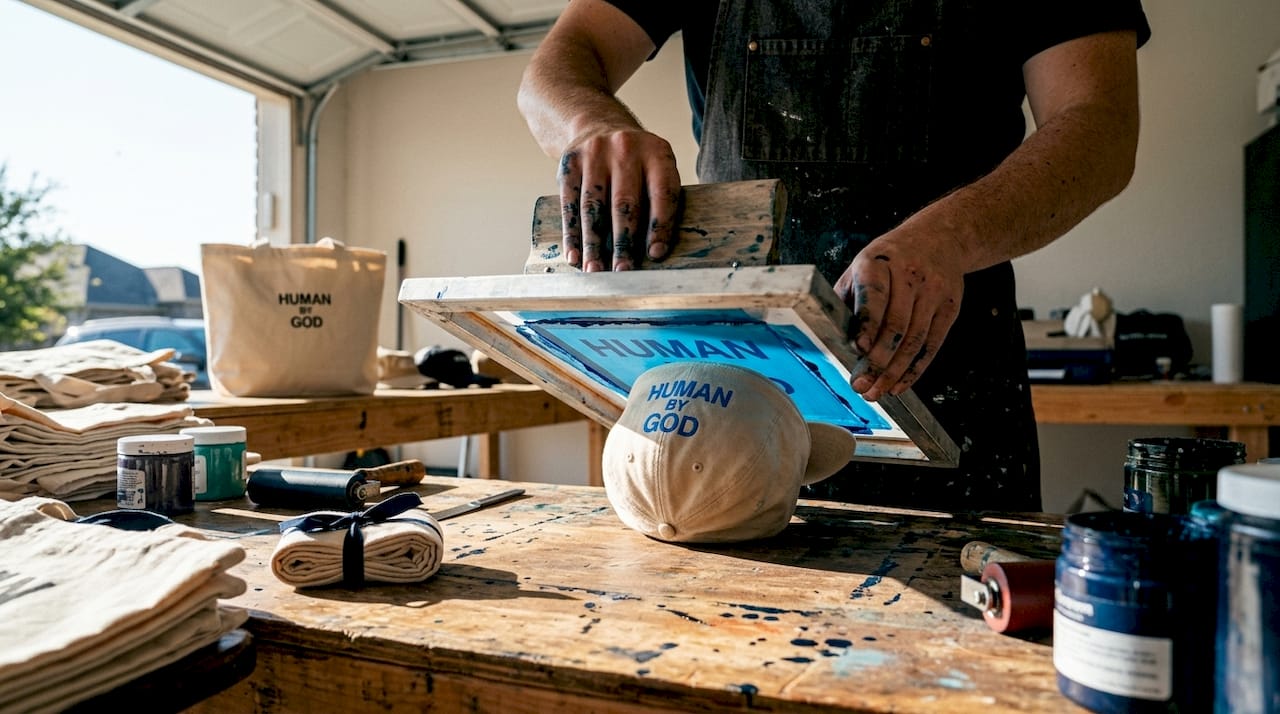
Minimalist scripture placement is the second distinguishing mark. Rather than covering a chest with a verse in bold gothic type, leading brands position text at the hem, the sleeve cuff, or the back collar in color-coordinated typography that reads as design before it reads as declaration. Human By God’s approach to Genesis 1:26 is a precise example: the reference appears quietly, integrated into the garment’s visual rhythm rather than announced. This restraint is not timidity. It reflects confidence that the wearer’s identity does not require amplification.
The design spectrum in faith-based fashion currently runs between two poles worth understanding directly:
| Design Approach | Characteristics | Best For |
|---|---|---|
| Quiet Faith | Minimalist placement, neutral palettes, premium fabrics, subtle scripture | Everyday wear, professional settings, versatile styling |
| Slogan-Heavy | Bold graphics, large text, high-contrast colors, declarative messaging | Outreach events, community gatherings, high-visibility contexts |
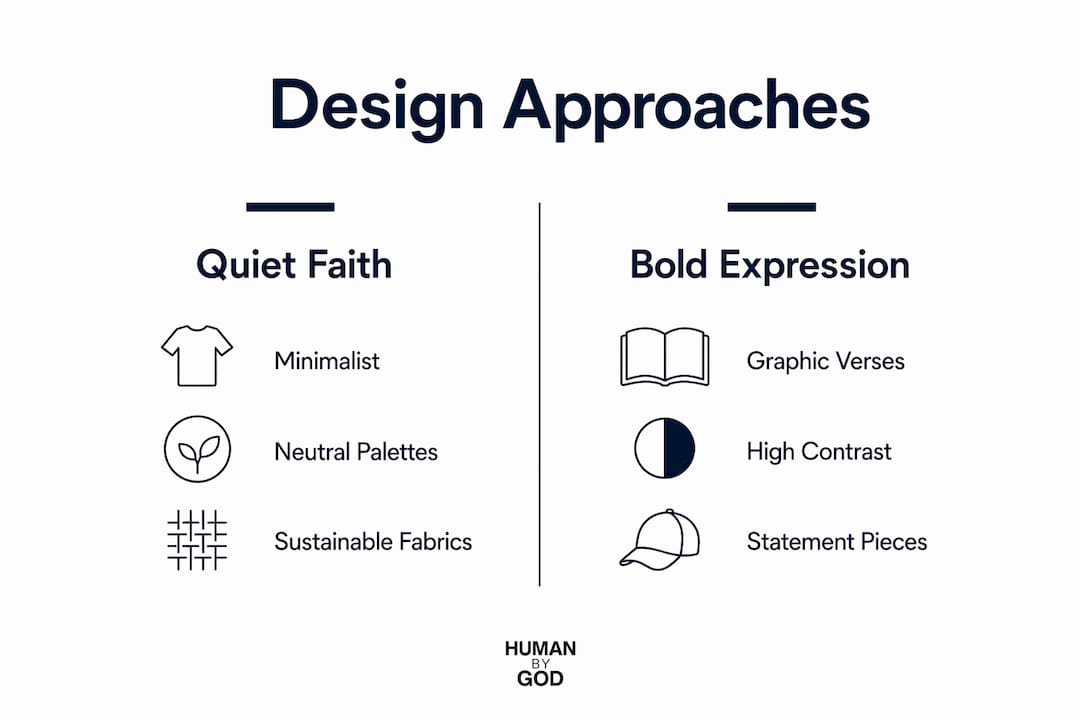
Both approaches serve a purpose. The Quiet Faith aesthetic, however, is the one driving Christian streetwear trends in 2026 because it allows the wearer to move through diverse social environments without the garment becoming a conversation piece before the person does.
Pro Tip: When evaluating a faith-based piece, check the GSM weight listed in the product specs. Anything below 250 GSM in a hoodie signals a brand prioritizing margin over craft. The garment will lose its shape and message within a season.
Craftsmanship in this category also extends to color discipline. The strongest pieces in scripture quotes apparel use monochromatic or analogous palettes, letting the typography breathe rather than compete with the base color. This is where faith-based fashion borrows directly from the premium streetwear playbook and applies it with theological intentionality.
How do mission-driven brands shape scripture-inspired streetwear culture?
Faith-based fashion treats clothing as a declaration of discipline and identity rather than decoration. This distinction separates mission-driven brands from labels that simply print a verse on a garment and call it Christian streetwear. The brand’s internal architecture matters as much as the product itself.
Avodah Dynamics is the clearest example of this model in practice. The brand integrates biblical leadership protocols, content ecosystems, and apparel into a single cultural offering. Purchasing a piece is participation in a broader mission, not just a style choice. Human By God operates from the same foundation, grounding every design decision in the theological claim that humans bear the image of God. That single idea, drawn from Genesis 1:26, governs fabric selection, typography, colorway, and copy. The product is the argument made tangible.
What mission-driven brands do differently:
- They embed evangelism and social impact into the business model, so purchasing supports Kingdom expansion beyond aesthetics
- They treat the uniform as a tool for disciplined daily execution, not a trend cycle to chase
- They build content, community, and apparel as one integrated system rather than treating the clothing as the end product
- They prioritize sustainable production and premium materials as expressions of stewardship, not just market positioning
- They resist the pressure to follow seasonal drops and instead build collections around theological anchors
The uniform as lifestyle concept is particularly significant. Scripture-inspired streetwear removes decision fatigue by functioning as a consistent daily practice. The wearer is not choosing what to say each morning. They are reinforcing who they are. This is the same logic behind the monastic habit or the military uniform, applied to contemporary street culture with intentionality and craft.
Consumer demand is confirming this direction. Sustainable materials and mission-driven models define the top brands in 2026, which means buyers are asking harder questions about where their money goes and what values the production process reflects. Faith-based fashion that cannot answer those questions is losing ground to brands that can.
What is the Quiet Faith movement and why does it matter?
The Quiet Faith movement is the dominant aesthetic shift in faith-based fashion right now, and it is best understood as a rejection of performance in favor of presence. Minimalist, mission-focused scripture apparel suited for diverse environments defines this movement. The goal is faith expression that does not alienate mainstream social contexts or require the wearer to explain themselves before a conversation begins.
“Authentic spiritual clothing fosters a steadier kind of presence — comfort, intention, and truth — rather than performance or showiness.” — Times Bulletin Mag
That steadiness is the point. A piece from Human By God worn to the gym, the office, or a coffee meeting carries its meaning without demanding acknowledgment. The scripture is there for the wearer first. If it opens a conversation, that is a consequence of presence, not the design objective. This is a meaningful departure from faith apparel that functions primarily as a public statement.
The Quiet Faith aesthetic also reflects a broader cultural maturity in how young believers think about faith identity through apparel. The loudest expression is not always the most confident one. Restraint communicates certainty. A garment that whispers its theology trusts the wearer to carry the weight of it.
Pro Tip: If a piece makes you feel like you need to explain or defend it the moment you put it on, it is working against you. The right faith garment should feel like an extension of your identity, not a costume.
Sustainable fabrics are central to the Quiet Faith movement as well. Organic cotton, recycled blends, and responsible dyeing processes align the production ethics with the theological values the garment claims to represent. A brand that preaches stewardship while using exploitative supply chains has a credibility problem that no typography can fix.
How to style faith clothing for modern, meaningful expression
Styling scripture-inspired streetwear well comes down to one principle: let one piece carry the weight. The best spiritual clothing starts with personal intention rather than trend-following, and that intention should be visible in how the full outfit is constructed around it.
Here is a practical framework for how to style faith clothing with integrity:
-
Choose an anchor piece first. Select one item that carries the scriptural or theological meaning you want present that day. A Human By God hoodie with a Genesis reference, a cap with quiet embroidery, or a tee with a single verse at the hem. The anchor piece sets the tone.
-
Build around it with reliable basics. Neutral trousers, clean sneakers, and a simple layer are the right supporting cast. Over-accessorizing scripture-inspired pieces dilutes the message and creates visual noise that works against the garment’s intention.
-
Match the occasion to the piece’s weight. A heavyweight embroidered hoodie reads differently at a gallery opening than at a Saturday morning run. Both are valid. Know which register you are dressing for and let the piece work within that context rather than against it.
-
Prioritize fit above all else. A scripture garment that fits poorly communicates carelessness, which contradicts the discipline the clothing is meant to embody. Premium faith-based fashion is cut with intention. Wear it at the size it was designed for.
-
Avoid stacking faith pieces. Wearing a scripture tee under a scripture hoodie with a scripture cap is not more faithful. It is more cluttered. One piece, worn with conviction, is always the stronger choice.
The broader principle behind how to style faith clothing is alignment. The garment should reflect an internal state, not perform one. When the outfit feels like an extension of who you are rather than a statement you are making, the styling is correct. That is the standard worth holding.
Key takeaways
Scripture-inspired streetwear is defined by premium construction, minimalist scripture placement, and mission-driven brand architecture that treats clothing as daily faith identity rather than seasonal decoration.
| Point | Details |
|---|---|
| Construction signals conviction | Heavyweight cotton (300+ GSM) and durable embroidery reflect the discipline faith demands, not just aesthetic preference. |
| Quiet Faith leads the movement | Minimalist placement and neutral palettes allow faith expression across diverse social settings without performance or explanation. |
| Mission-driven brands build culture | Brands like Human By God and Avodah Dynamics embed theology into every design decision, not just the graphic. |
| One anchor piece is the styling rule | Pairing a single intentional faith piece with simple basics is stronger than layering multiple scripture items. |
| Intention precedes trend | Pieces chosen for personal alignment with specific values outlast trend-driven purchases in both wear and meaning. |
Why restraint is the most honest thing faith fashion can do
I have watched faith-based fashion cycle through every version of itself: the oversized graphic tees with gothic scripture, the embroidered caps with three verses competing for space, the drop-shipping brands printing “Philippians 4:13” on every available surface. None of it aged well, and most of it never felt honest to begin with.
What I find genuinely interesting about where faith-based fashion is shifting right now is that the most credible brands are the quietest ones. They are not trying to convert anyone through a chest print. They are building something more like self-architecture: clothing that reflects an internal order and carries it into the world without demanding a response.
Human By God gets this right in a way that is rare. The brand does not hedge. It does not try to be secular enough to avoid offense or religious enough to signal virtue. It holds a single theological claim, Genesis 1:26, and builds every product decision around it. That kind of discipline is harder than it looks, and it shows in the garments.
The uncomfortable truth about spiritual clothing is that most of it is worn for other people. The Quiet Faith movement is a correction to that. It asks the wearer to dress for their own identity first, and to trust that the presence that creates will do more than any slogan ever could. That is not a fashion philosophy. It is a theological one, and it is the right one.
— H
Wear what you actually believe
Human By God designs for the person who does not need their faith to be loud to be real. The Genesis Collection is built on a single scriptural anchor, Genesis 1:26, expressed through color-coordinated typography, heavyweight cotton, and silhouettes that move from the gym to the office without adjustment. Every piece is designed to be worn daily, not saved for occasions. If you are building a wardrobe that reflects who you are rather than what you want people to think, the premium hoodies and tees at Human By God are the place to start. Craftsmanship, restraint, and a clear theological point of view, all in one collection.
FAQ
What is scripture-inspired streetwear?
Scripture-inspired streetwear is faith-based fashion that integrates biblical text, references, or theology into contemporary street-style garments. It prioritizes intentional design and premium construction over loud graphics or performative messaging.
How is Quiet Faith different from regular Christian streetwear?
The Quiet Faith aesthetic favors minimalist scripture placement, neutral palettes, and sustainable fabrics over bold slogans or high-contrast graphics. It allows faith expression across diverse social settings without requiring the wearer to explain or defend the garment.
What fabrics should scripture-inspired streetwear use?
Heavyweight cotton at 300+ GSM and durable embroidery are the construction standards for premium faith-based fashion. These materials reflect the quality and discipline the theology claims to represent, and they outlast cheaper screen-printed alternatives.
How do I style scripture quotes apparel without overdoing it?
Choose one anchor piece with scriptural meaning and pair it with simple, neutral basics. Styling scripture-inspired streetwear successfully means avoiding over-accessorizing and letting a single intentional piece carry the weight of the outfit.
What makes a faith-based brand mission-driven?
A mission-driven brand embeds its theological values into every layer of the business: fabric sourcing, design decisions, production ethics, and community impact. Brands like Human By God and Avodah Dynamics treat the product as an expression of a larger mission, not just a revenue vehicle.