

Heirloom-quality Christian clothing is defined by three non-negotiable pillars: premium natural fibers, expert construction, and timeless minimalist design that carries faith meaning without announcing it. The industry term for this category is slow fashion, and within faith apparel, it represents a deliberate rejection of seasonal trends and disposable garments. What makes clothing heirloom quality is not price alone. It is the combination of long-staple cotton, wool, and cashmere with construction methods like fully-fashioned knitting and hand-finished seams, producing pieces that physically improve with wear and carry meaning across years, even generations.
What materials and construction make christian clothing heirloom quality?
The fiber is where heirloom quality begins. Natural fibers like cashmere, wool, linen, and long-staple cotton possess structural properties that synthetics cannot replicate. They breathe, they age well, and they develop character over time rather than degrading into pilling and distortion.
Here is what separates heirloom-grade materials from standard fast fashion fabrics:
- Long-staple cotton (Egyptian, Pima, or Supima): longer fibers mean fewer joins, less pilling, and a surface that grows softer with every wash rather than rougher
- Cashmere and eco cashmere: fibers chosen for longevity have exceptional strength and improved feel over years, unlike acrylic blends that shed and thin out
- Wool and merino wool: natural elasticity means the garment returns to shape after wear, resisting the bagging that destroys cheaper knits
- Linen: one of the strongest natural fibers available, it becomes more supple with age and holds color without fading as rapidly as polyester
- Silk: used in linings and detail work, it adds structural integrity and a weight that signals quality immediately to the hand
Construction is the second pillar. Fully-fashioned knit garments are produced to shape rather than cut and sewn from flat fabric. This matters because cut-and-sew creates raw edges that fray; fully-fashioned construction eliminates that failure point entirely. Jakob Knitwear’s heirloom cardigan demonstrates this approach with a zero-waste fully-fashioned knit using eco cashmere. The result is a garment with structural integrity that outlasts anything cut from a bolt of fabric. Hand-linked finishes at seams and cuffs prevent the unraveling that ends the life of most mass-market knitwear.
Fast fashion synthetics average a lifespan measured in months. Annual textile waste runs 33–80 pounds per person, a figure that reflects how quickly low-grade garments exit the wardrobe and enter the landfill. Heirloom construction inverts that equation entirely.
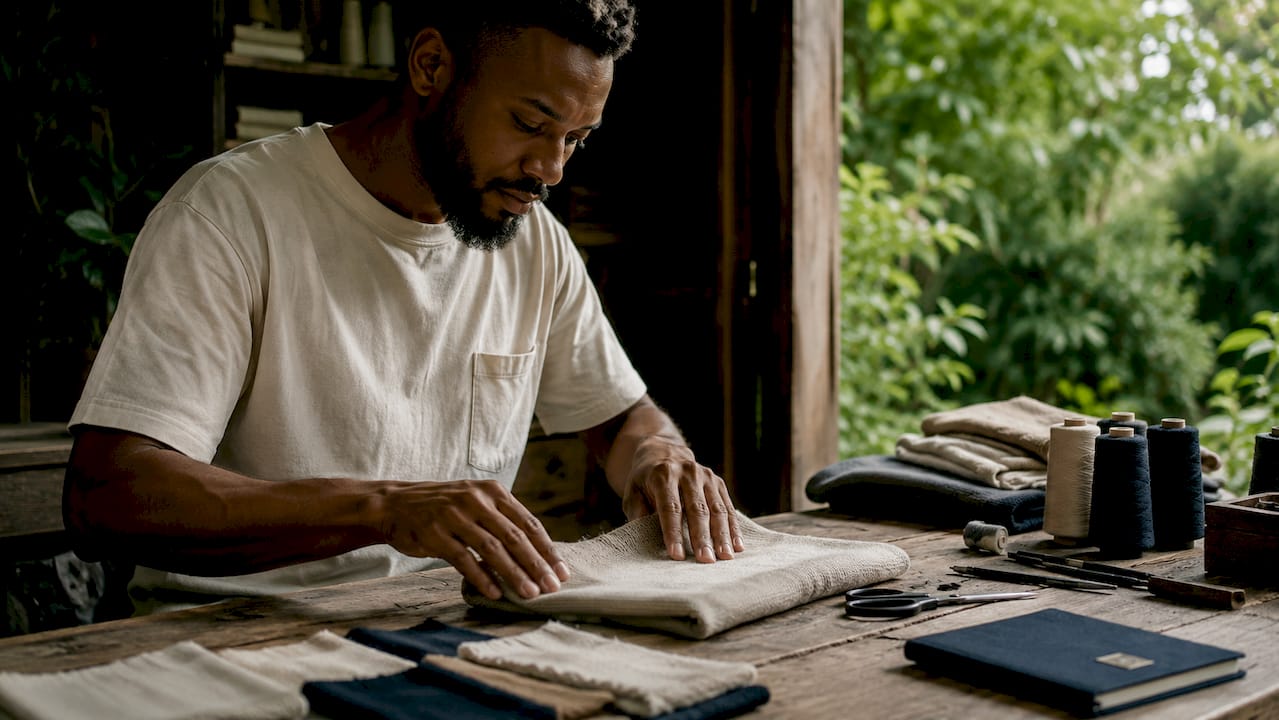
Pro Tip: Wash heirloom natural fiber garments in cold water on a gentle cycle, reshape while damp, and dry flat. Heat and agitation are the primary causes of shrinkage and fiber breakdown in cashmere and long-staple cotton.
How does faith show up in design without becoming preachy?
The design philosophy behind high-quality Christian fashion is restraint. Classic, modest silhouettes that reject seasonal fashion cycles create garments that remain relevant across decades. A well-proportioned crewneck or a clean-cut hoodie does not date itself the way a graphic-heavy piece does.
Faith expression in heirloom apparel works through specificity, not volume. Subtle embroidery, purposeful typography rooted in Scripture, and color choices that feel considered rather than commercial are the tools. The Little Rose Shop demonstrates this with exclusive designs aimed at modern Catholic women, creating pieces that integrate belief into daily wear rather than reserving faith for formal occasions. That shift matters. Modern brands emphasize minimalist, purposeful faith elements for versatile daily wear rather than ornate or occasion-specific designs.
For anyone building a wardrobe around these principles, the design considerations worth evaluating are:
- Typography over iconography: a word or phrase rooted in Scripture reads as considered; a large cross graphic reads as costume
- Color coordination: faith apparel that uses tonal or monochromatic palettes feels premium; clashing colors signal mass production
- Placement: chest or sleeve placement of a faith detail is subtle; all-over print is not
- Scale: small, precise lettering carries more weight than oversized slogans
- Silhouette neutrality: a garment that fits well and reads as contemporary first, faith-rooted second, will be worn more and worn longer
Human By God applies this logic directly. The brand’s scripture typography approach uses quiet, color-coordinated lettering rooted in Genesis 1:26, producing pieces that sit comfortably alongside Fear of God Essentials or Aimé Leon Dore in any wardrobe. The faith is present. It does not shout.
How do you identify heirloom-quality christian garments today?
Recognizing genuine heirloom quality requires looking past marketing language. The word “premium” appears on garments that cost twelve dollars to produce. The criteria below cut through that noise.
| Feature | Fast Fashion Christian Apparel | Heirloom-Quality Christian Apparel |
|---|---|---|
| Fiber content | Polyester, cotton-poly blends | Long-staple cotton, wool, cashmere, linen |
| Construction | Cut and sewn, overlocked seams | Fully-fashioned knit, hand-linked or hand-finished seams |
| Faith design | Bold graphics, slogans, large crosses | Subtle typography, embroidery, Scripture-rooted detail |
| Aging behavior | Pilling, fading, distortion within months | Softens and strengthens with wear over years |
| Brand transparency | No fiber sourcing information | Named fiber origins, construction method disclosed |
| Price per wear | Low upfront, high over time | Higher upfront, lower over years of use |
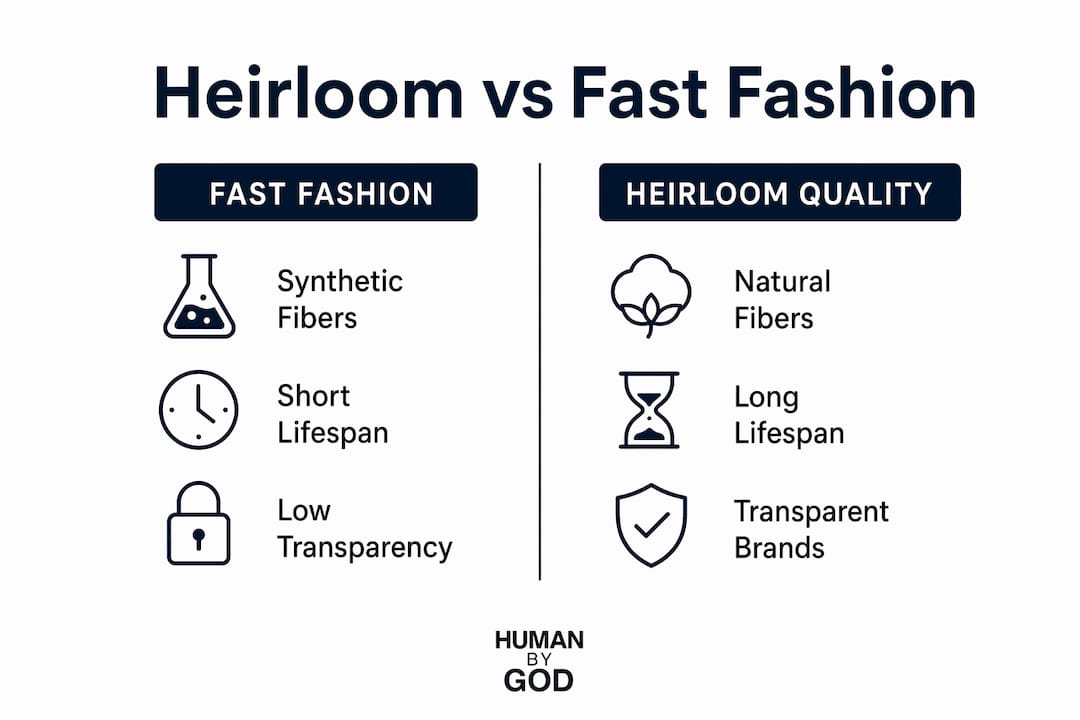
The fabric hand test is the most immediate indicator. Long-staple cotton feels smooth and dense, not thin or papery. Cashmere has a warmth and weight that acrylic mimics poorly. Pull gently at a seam: a hand-finished seam resists; an overlocked seam on cheap fabric gives immediately.
Brand transparency is the second filter. Brands that disclose fiber sourcing, construction methods, and manufacturing locations are accountable for their quality claims. Brands that do not are not. Human By God’s approach to choosing quality Christian tees reflects this standard: material choices are intentional, not incidental.
For Christian apparel specifically, look at how faith is expressed. A garment that integrates belief through restrained typography or a single embroidered detail is designed to last. A garment covered in slogans is designed to sell quickly.
Pro Tip: Before purchasing, ask the brand directly: what is the fiber content, where is it sourced, and how are the seams finished? A brand confident in its quality answers immediately. A brand that deflects or gives vague answers tells you everything you need to know.
What role does heirloom christian clothing play in sustainable faith?
Stewardship is a concept woven through Scripture, and it applies directly to how you consume clothing. Heirloom quality apparel reduces environmental footprint compared to fast fashion by creating garments designed for multiple owners across long periods. That is not a marketing claim. It is a structural outcome of better materials and construction.
“Choosing heirloom quality is one of the most direct ways a consumer can reduce textile waste. A garment built to last twenty years removes the need for twenty garments built to last one year each.” — Heirloom Quality, Sustainability Directory
Textile waste averages 33–80 pounds per person annually. That number reflects a system built on disposability. Choosing one well-made hoodie over five cheap ones is not just a financial decision. It is a values decision, and for faith communities, it aligns with a longer tradition of caring for what you have been given.
Heirloom pieces also carry social weight within faith communities. A garment passed from parent to child, or gifted at a milestone like confirmation, carries meaning that a mass-produced item cannot. The role of apparel in faith identity is not trivial. What you wear consistently shapes how you and others understand your commitments.
Slow fashion and Christian values converge here without requiring any stretch of logic. Both ask the same question: what is worth keeping?
Key takeaways
Heirloom-quality Christian clothing requires premium natural fibers, expert construction, and timeless minimalist faith design to produce garments that last decades and carry genuine meaning.
| Point | Details |
|---|---|
| Fiber determines longevity | Long-staple cotton, cashmere, wool, and linen age better than any synthetic blend. |
| Construction method matters | Fully-fashioned knitting and hand-finished seams prevent the failure points that end fast fashion garments early. |
| Faith design should be restrained | Subtle typography and embroidery outlast bold graphics in both style relevance and physical wear. |
| Transparency signals quality | Brands that disclose fiber sourcing and construction methods stand behind their claims. |
| Heirloom choices reduce waste | One well-made garment replaces many disposable ones, aligning with both sustainability and stewardship. |
Why restraint is the most radical thing in faith fashion
The conventional wisdom in Christian apparel has long been that visibility equals conviction. Bigger cross, louder slogan, more obvious message. My experience reading this category closely tells a different story.
The garments that actually get worn, that show up in daily life at the gym, the office, and on a walk, are the ones that feel like clothing first and faith statement second. That is not compromise. That is confidence. A person secure in what they believe does not need their hoodie to do the announcing.
What I find genuinely interesting about the heirloom quality conversation is how it reframes the economics of faith fashion. Spending more on one piece that lasts a decade is not indulgence. It is the opposite of indulgence. It is the decision to own less and mean more with what you keep. The brands getting this right, Human By God included, are building for the reader who already knows what they believe and wants clothing that reflects that without performing it.
The shift from church clothes to everyday faith wear is the most significant cultural move in this category in a generation. Heirloom quality is what makes that shift sustainable, literally and spiritually.
— H
Human by god and the genesis collection
Human By God was built on the premise that faith and premium craft belong together. The Genesis Collection reflects that directly: hoodies and tees constructed with quality materials, finished with quiet typography rooted in Genesis 1:26, and designed to wear as naturally at the gym as at a dinner table.

The collection avoids every cliché in Christian apparel. No slogans. No oversized graphics. Just considered design that carries weight without demanding attention. If you are building a wardrobe around heirloom principles, the Genesis Collection is a practical starting point. The embroidered Genesis Hoodie in particular demonstrates what hand-finished faith detail looks like when it is done with restraint and intention.
FAQ
What is heirloom-quality christian clothing?
Heirloom-quality Christian clothing is apparel built from premium natural fibers like long-staple cotton, wool, or cashmere, constructed with methods like fully-fashioned knitting, and designed with subtle, timeless faith expression. The goal is a garment that lasts decades and carries meaning beyond a single season.
What makes clothing heirloom quality versus regular quality?
Heirloom quality requires natural fibers that improve with age, construction techniques that prevent seam failure, and classic silhouettes that do not date. Regular quality garments may use better materials than fast fashion but still rely on cut-and-sew construction and trend-driven design that limits their lifespan.
Is heirloom christian apparel only for special occasions?
No. The defining characteristic of modern heirloom Christian fashion is versatility for daily wear. Brands like Human By God and The Little Rose Shop design pieces intended for everyday use, not reserved for church or formal occasions.
How does heirloom clothing connect to christian values around sustainability?
Choosing heirloom garments directly reduces textile waste, which averages 33–80 pounds per person annually under fast fashion consumption patterns. Owning fewer, better things aligns with the principle of stewardship found throughout Scripture.
How do i spot genuine heirloom quality in a christian clothing brand?
Check fiber content for named natural fibers, look for disclosed construction methods like fully-fashioned knitting or hand-linked seams, and evaluate how faith is expressed in the design. Restrained typography and subtle embroidery signal intentional craft; bold slogans and polyester blends signal mass production.